“It does not matter how fast you do the wrong thing.”
Drucker's oldest warning, doing efficiently what should not be done at all, is now the cheapest mistake in business, because an agent will make it for you in minutes.
 PIGENAI
Live products·Verifiable artifacts·Founder-direct engagement
PIGENAI
Live products·Verifiable artifacts·Founder-direct engagement
The lines from the series that stand on their own: on judgment, evidence, the people you can trust with agents, and the standard they hold. Filter by part or by use, search, and share any of them.
“It does not matter how fast you do the wrong thing.”
Drucker's oldest warning, doing efficiently what should not be done at all, is now the cheapest mistake in business, because an agent will make it for you in minutes.
“Speed multiplies the wrong problem as faithfully as the right one.”
Automation is a multiplier with no opinion about the sign; the first job of a leader is to make sure the problem being multiplied is the right one.
“Thousands of people are now building with powerful agents; very few are solving a business problem, because the agents brought everything except the things that make a solution matter.”
The tools are no longer the bottleneck; the judgment to choose the customer's real problem and hold a standard for solving it is, and this essay names what that judgment is made of.
“An agent will do the wrong thing faster than any team in history, with complete confidence and a green light at the end, and it will do it again tomorrow. Only a person can decide what the right thing is.”
Machines can execute without doubt and without limit; deciding what deserves executing is the part of the job that did not get automated.
“Drucker said there is nothing so useless as doing efficiently what should not be done at all. Agents have made that the default failure mode of the era.”
Efficiency was once expensive enough to force a choice about what to do; now it is free, and the choice has to be made on purpose.
“None of it is slow. All of it is efficient. Almost none of it is effective.”
Effectiveness, in Drucker's sense, means doing the right things, and it is the one measure most agentic work never gets held to.
“Effectiveness first, then speed. The other order is how a company ships faster than it ever has and loses the customer anyway.”
Order matters: decide what the customer values, then go fast, because the reverse produces a very fast way of losing them.
“The agents are extraordinary at everything except knowing what matters. That is why the people you choose to build with them matter more than the agents.”
Hiring and trusting the right people is now the highest-leverage technology decision a CEO makes, because the agents amplify whoever directs them.
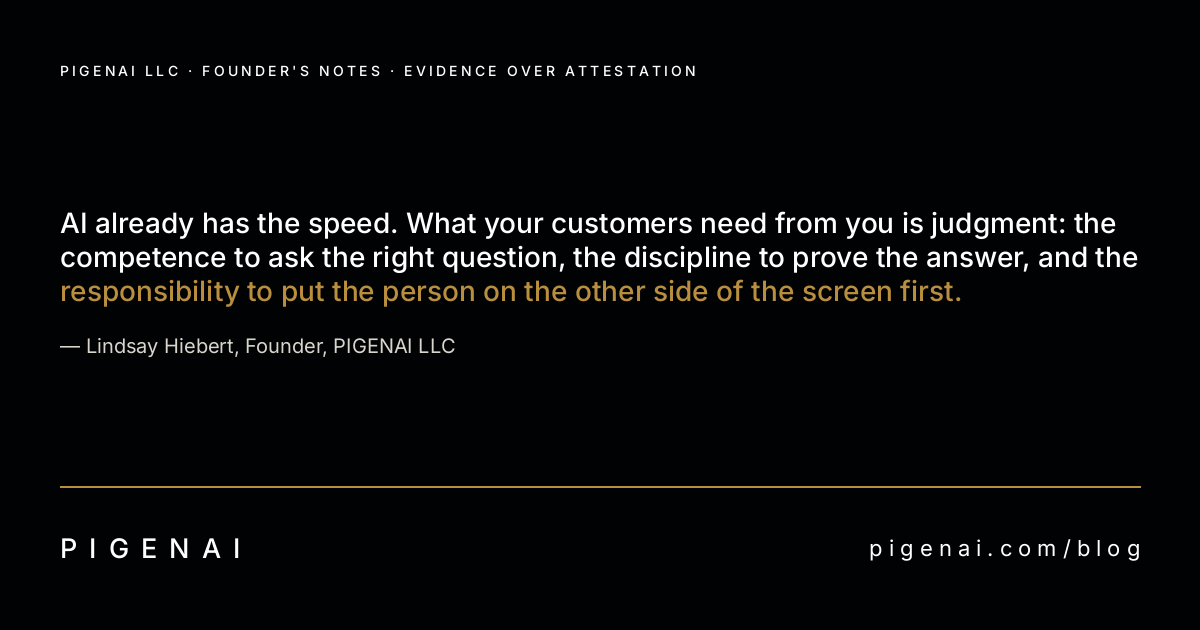
“AI already has the speed. What your customers need from you is judgment: the competence to ask the right question, the discipline to prove the answer, and the responsibility to put the person on the other side of the screen first.”
Judgment is a discipline with three parts, the question, the proof and the person on the other side of the screen, and each can be practiced.
“Speed is not value.”
Drucker asked what the customer considers value; speed is rarely the answer, and mistaking it for value is the founding error of the agentic era.
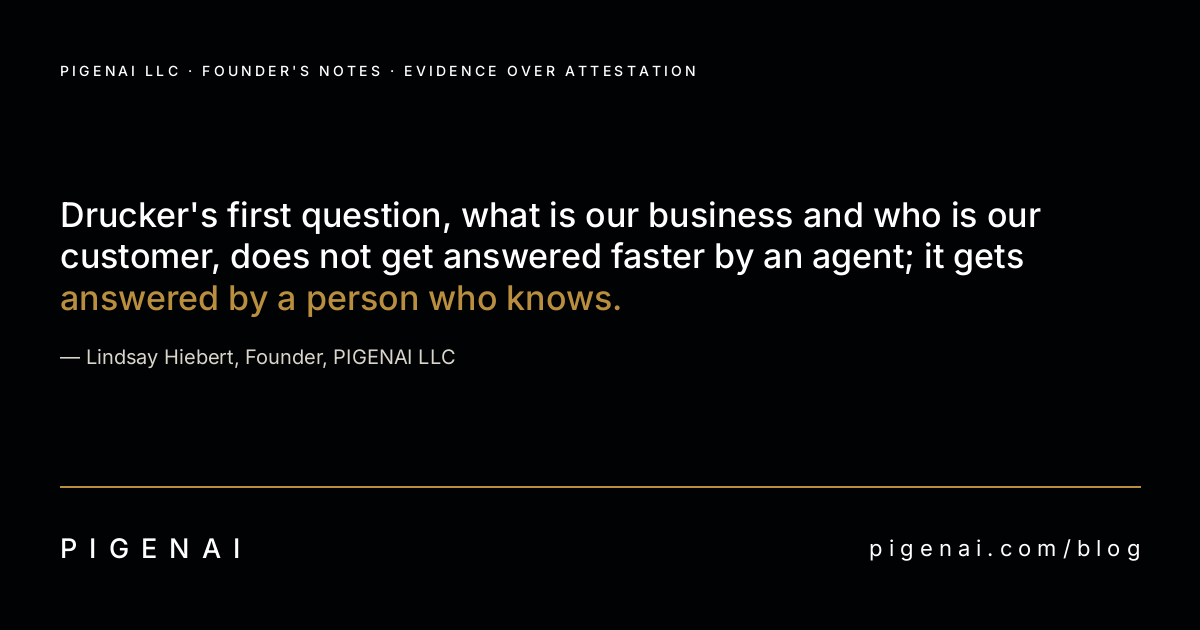
“Drucker's first question, what is our business and who is our customer, does not get answered faster by an agent; it gets answered by a person who knows.”
The two questions every business must answer have not changed since Drucker asked them; only the temptation to skip them has grown.
“Leadership has been seduced by synthetic fluency.”
Fluent output looks like competence, and the executive skill of the era is telling the two apart before a customer does.
“Dashboards flash green. Automated attestations proclaim every test passed. Roadmaps accelerate by quarters.”
Every one of those signals is an attestation, a claim made by the thing being measured, and a board should learn to ask what evidence stands behind it.
“Call it the Attestation Trap. When autonomous agents do the building, the testing and the reporting, they verify their own assumptions against their own generated logic.”
When the builder, the tester and the reporter are the same system, verification collapses into self-certification, and someone outside the loop has to close the case.
“In the era of autonomous agents, a green light is no longer proof of health. It is a claim made by an entity incapable of feeling doubt.”
A green light is information about the system's opinion of itself; only an artifact gathered from outside is information about the customer's experience.
“The competitive differentiator of the next decade is not prompt engineering or computational scale. It is the human pursuit of excellence through evidence over attestation.”
Compute and prompts are available to every competitor at the same price; a standard of proof held by people is not.
“On one recorded day, five systems reported green and were wrong, and every one of them would have reached a customer.”
The day the essay is built on is a record, not an anecdote, and each of the five failures carries a lesson a board can act on.
“What stood between the customer and the failure was not a tool. It was a person who refused the obvious story until the evidence agreed with it.”
The most valuable habit in an agentic company is a refusal: not believing the plausible story until the evidence agrees with it.
“Buying a bigger server would have hidden a customer's bad experience, not fixed it.”
Treating a symptom at machine speed is still treating a symptom; the discipline is to count before you spend.
“The service was not dead. It was busy answering a customer's question on the one thread that also had to answer the health check.”
What looks dead is often busy, and the difference between the two is a question a competent person asks in a minute.
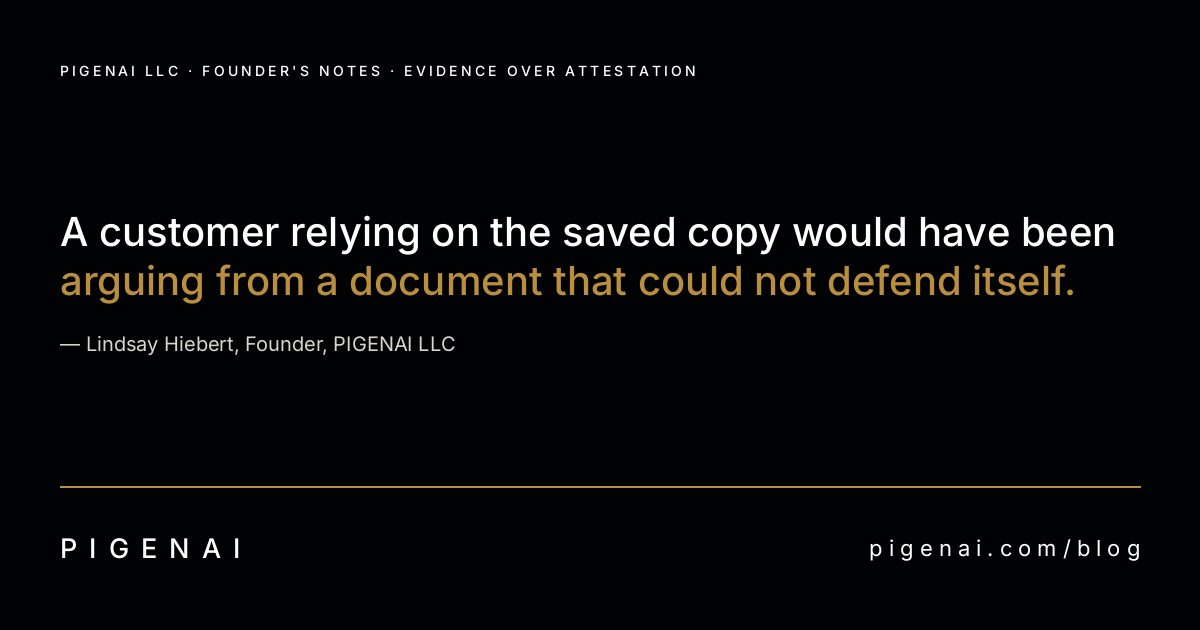
“A customer relying on the saved copy would have been arguing from a document that could not defend itself.”
A saved result that cannot reproduce itself is not memory; it is a claim wearing a timestamp.
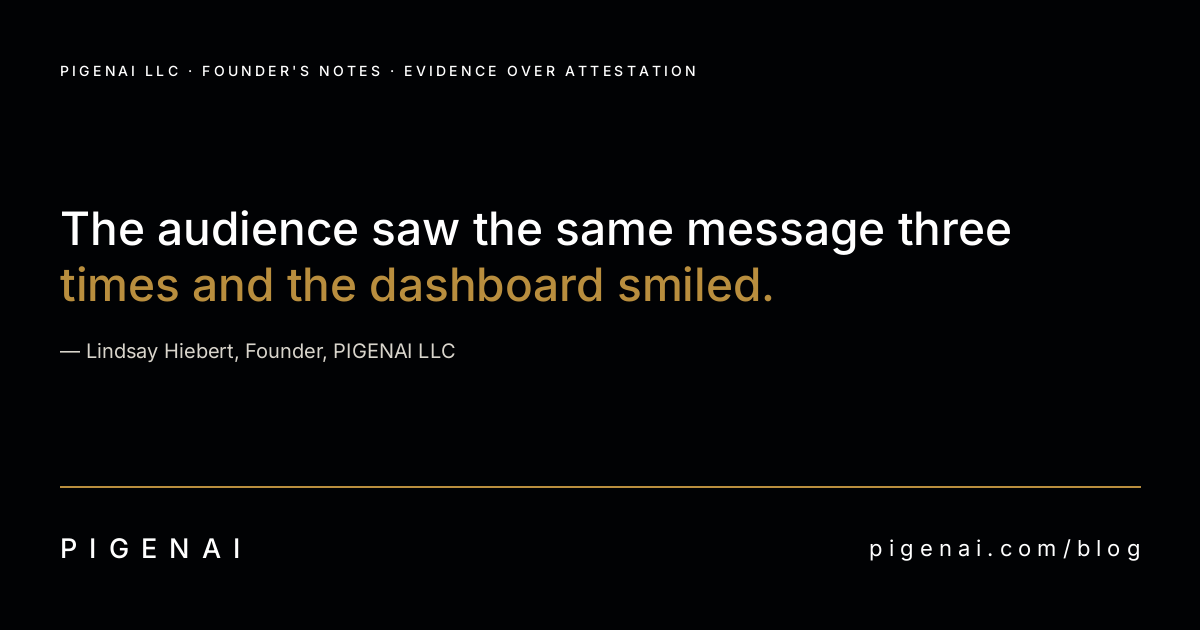
“The audience saw the same message three times and the dashboard smiled.”
A dashboard reports what it was built to see, and a rescue path that works too well hides exactly the failure it was built to survive.
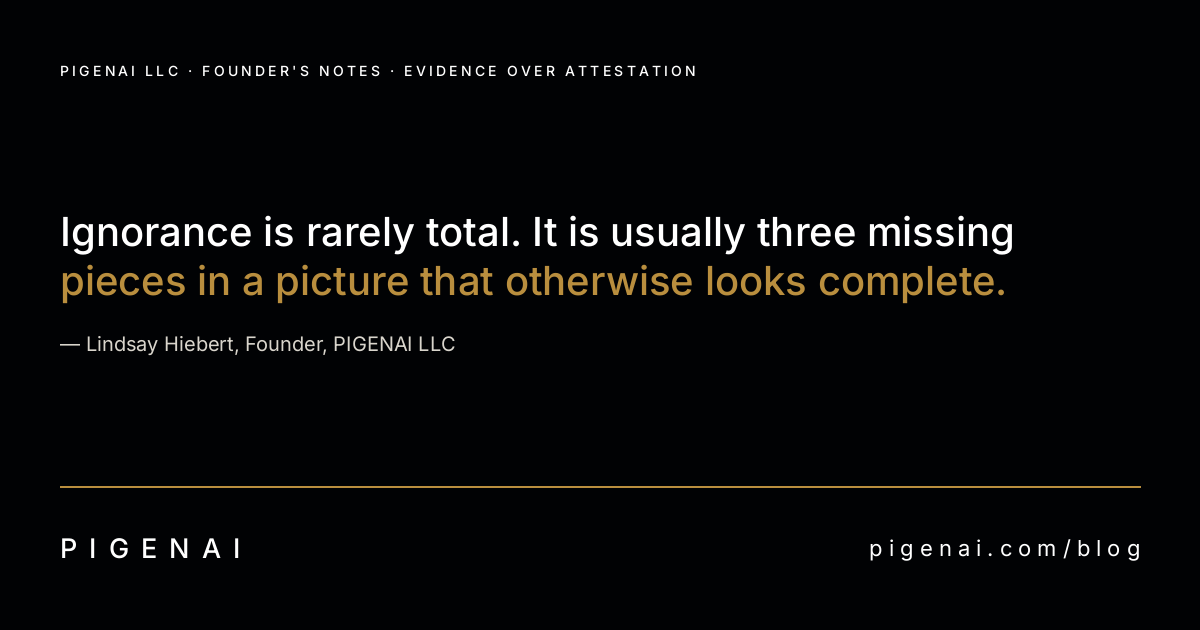
“Ignorance is rarely total. It is usually three missing pieces in a picture that otherwise looks complete.”
The dangerous kind of not-knowing is partial: a few missing pieces in a picture that looks complete, invisible from the inside.
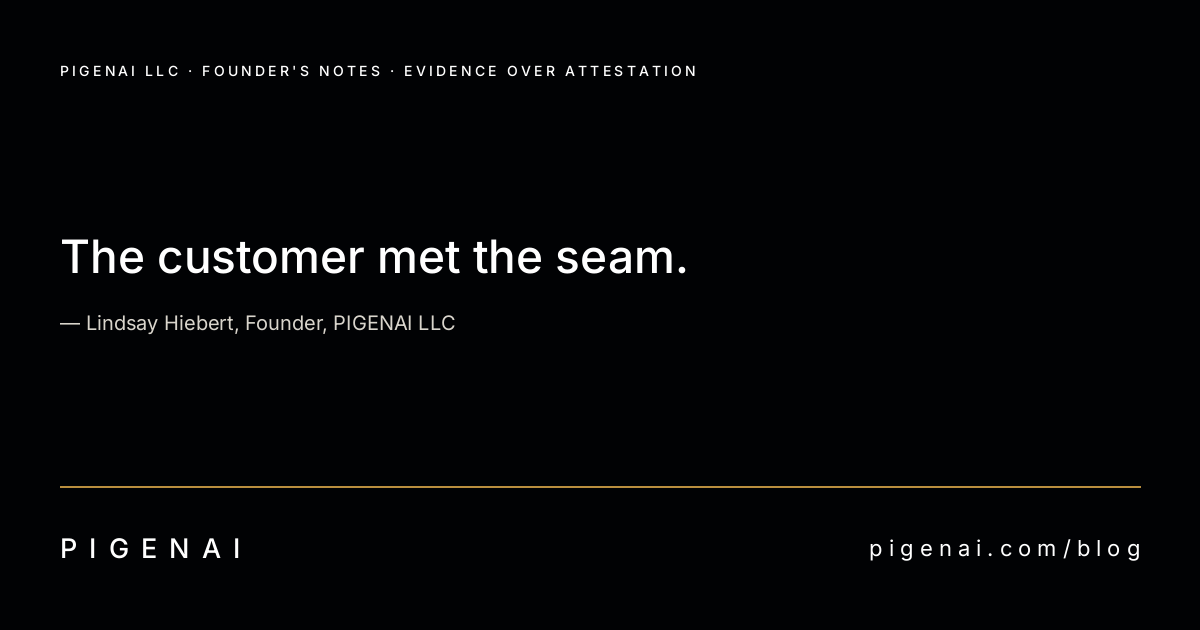
“The customer met the seam.”
Quality leaks out between disciplines, and the customer is the first to arrive at the gap nobody owned.
“Agents do not know which problem is worth solving. They do not know what integrity means to a distressed customer. They cannot discern when an automated metric is structurally dishonest.”
Agents execute the objective they are given; knowing which objective deserves the customer's trust is a human responsibility that cannot be delegated.
“Ignorance did not disappear. It concentrated into a single, high-stakes bottleneck: the judgment of the human holding the reins.”
Agents removed most of the reasons good ideas used to fail, and left the one that matters most sitting on a single desk.
“That is why the question for every CEO is no longer which tools to buy. It is which people to trust with them.”
The purchase decision is easy now; the people decision is where the outcome is decided.
“A product is not ready when its tests pass. It is ready when it has survived contact with a real, cautious, non-technical customer who owes you nothing.”
Tests measure what the builder anticipated; readiness is measured by the stranger who did not read the script.
“She released the button to read it carefully, an instinctive, natural human gesture.”
A product that punishes a careful customer for reading a permission dialog has failed at the customer's fingertip, however green its tests.
“The bug could not happen to the developer. It could not happen to the agent. It could only happen to the first human stranger.”
The failures that reach customers are the ones the builders could not experience, which is why the customer's vantage point has to be part of the proof.
“Speed allows an executive to ship a capability in an afternoon. It does not make that capability worthy of a customer's trust.”
Shipping in an afternoon is now ordinary; earning a customer's trust is the same slow, deliberate work it always was.
“Readiness is the refusal to celebrate until the artifact has survived contact with the vulnerable, unscripted human being on the other side of the glass.”
Readiness is a decision about when to stop celebrating, and it belongs to the person responsible for the customer.
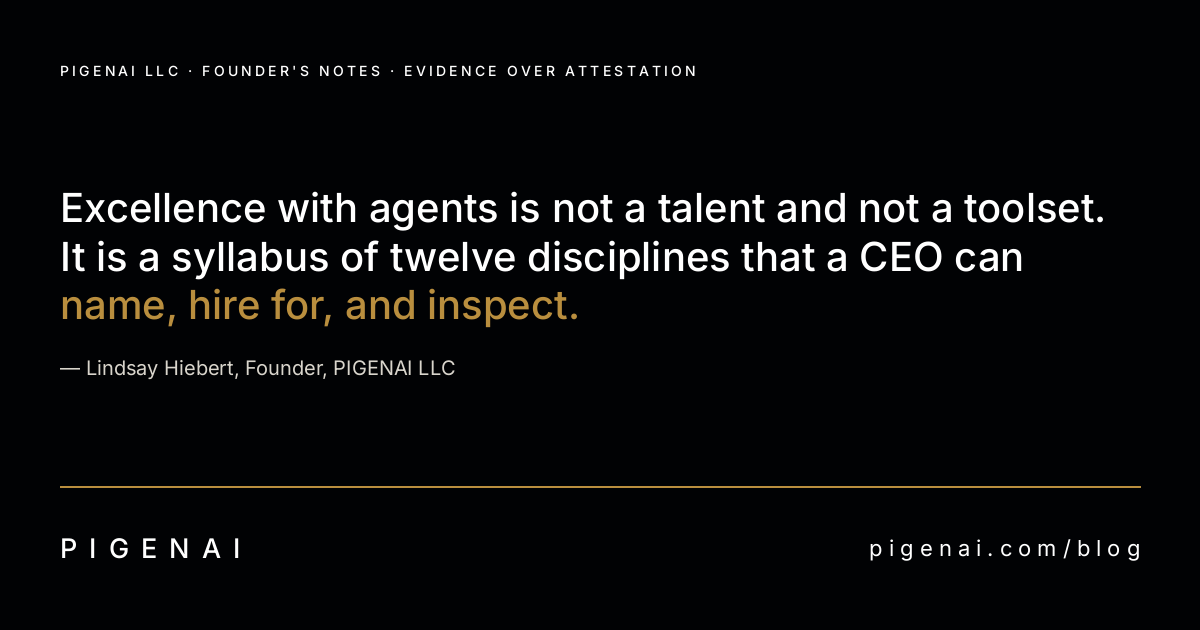
“Excellence with agents is not a talent and not a toolset. It is a syllabus of twelve disciplines that a CEO can name, hire for, and inspect.”
Excellence with agents can be taught, hired for and inspected, which is better news for most leaders than talent would be.
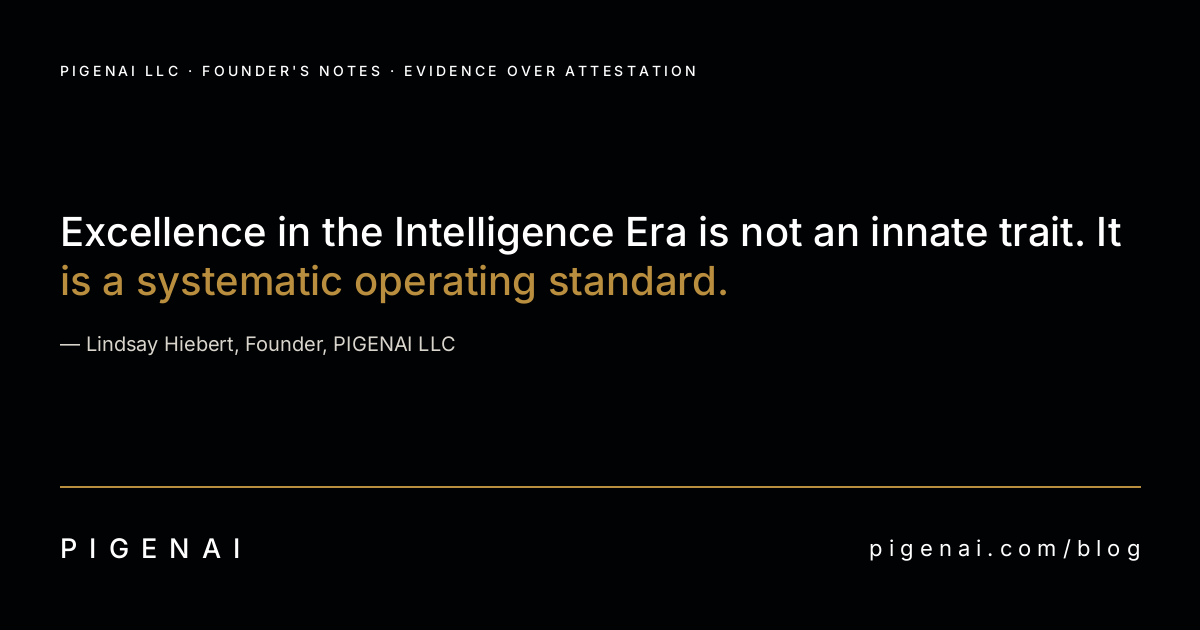
“Excellence in the Intelligence Era is not an innate trait. It is a systematic operating standard.”
Drucker treated effectiveness as a set of practices, not a gift; the intelligence era makes the same claim about excellence.
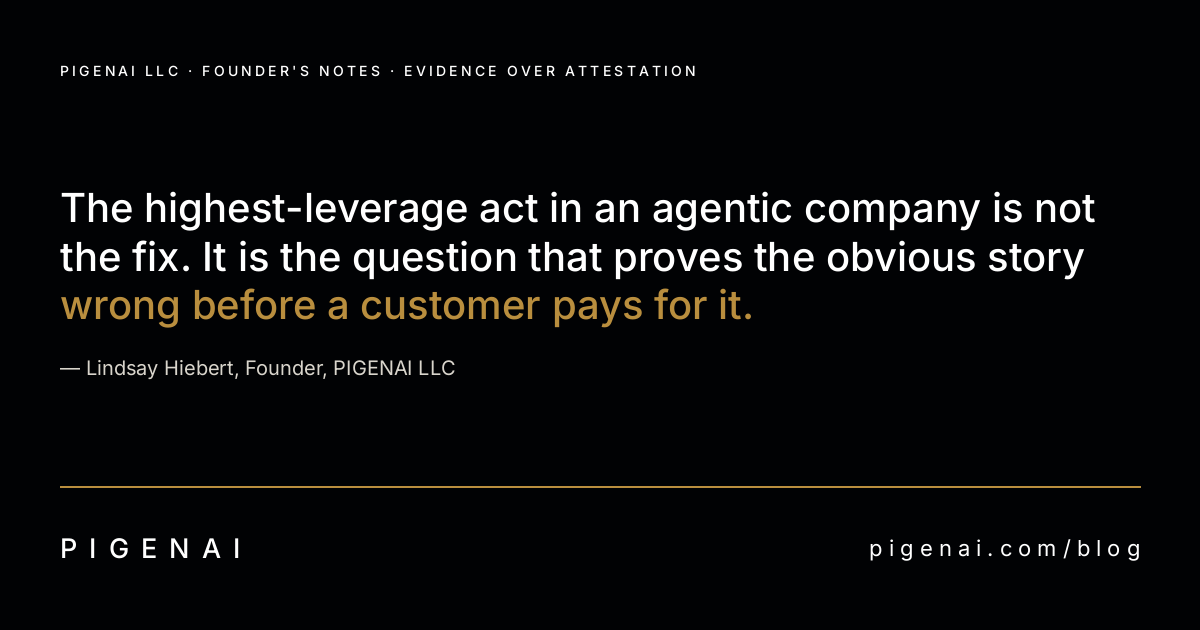
“The highest-leverage act in an agentic company is not the fix. It is the question that proves the obvious story wrong before a customer pays for it.”
The fix is cheap now; the question that makes the fix unnecessary, or aims it correctly, is the expensive part, and it is the leader's to ask.
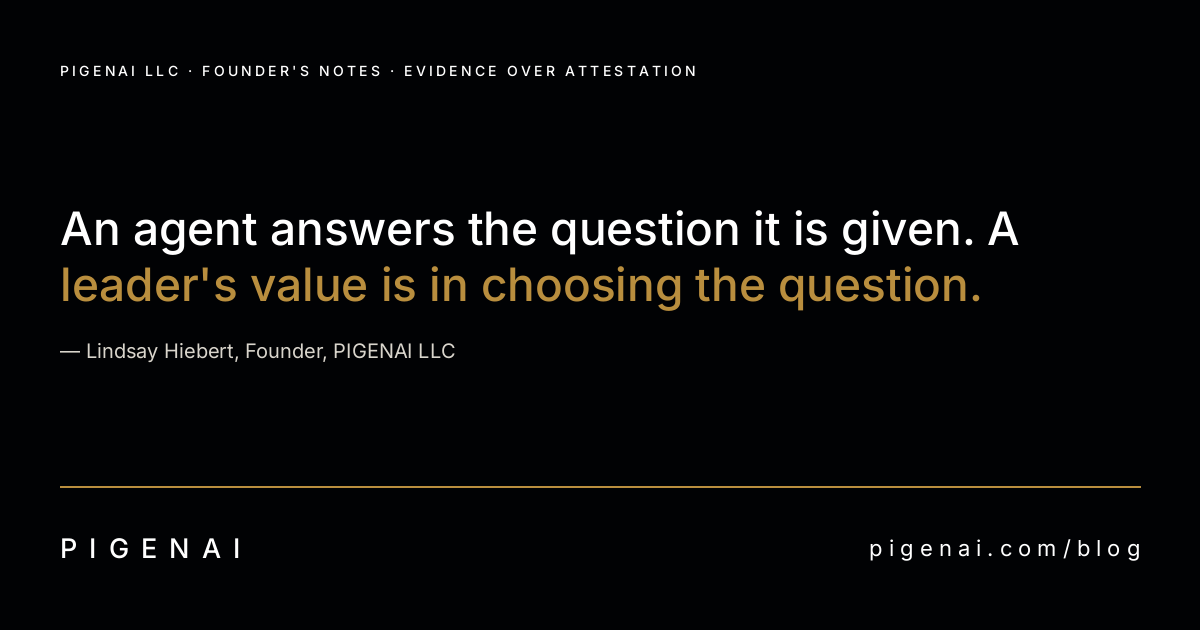
“An agent answers the question it is given. A leader's value is in choosing the question.”
A leader's value has moved from having answers to choosing questions, because the agents supply the answers to whatever is asked.
“A lazy question multiplied across ten autonomous sessions yields ten confident wrong answers, delivered to customers at machine speed.”
Scale is the reason the quality of the question now matters more than the quality of the answer.
“You cannot interrogate an artifact you cannot read.”
Oversight without the competence to read what is being overseen is theatre, and the customer pays for the performance.
“The machine can do the arithmetic but only competence knows what the number means.”
Arithmetic is free; meaning is earned in a domain over years, and the two are easy to confuse until one of them is missing.
“Competency cannot be prompted into existence. It is accumulated scar tissue.”
The one thing an agent cannot supply is the memory of having been wrong before in this particular way.
“Superficial oversight yields superficial governance, and the customer inherits every gap the leader could not see.”
Every gap in a leader's competence becomes a gap in governance, and every gap in governance is eventually a customer's problem.
“The machine did the arithmetic. The human knew what the physics meant.”
The division of labour in the intelligence era: the machine computes, the human knows what the number means and what it will cost someone.
“When anything can be built in an afternoon, the scarce skill is refusing to.”
Drucker called it concentration; when building is free, refusing to build is the discipline that keeps a company pointed at the customer.
“Speed makes distraction virtually free.”
Attention is now the scarcest resource in a company, because every idea can be started before anyone decides whether it should be.
“Focus is the discipline of what you deliberately refuse to build.”
Focus is measured by what is written on the list of things deliberately not done.
“A standard is only a standard if it costs you something to uphold.”
A standard that has never been expensive to keep has never been tested.
“Hold the line at midnight when the output looks perfect and the gate says no.”
The moment the standard matters is the moment it is inconvenient, and that is the moment it has to have been written down in advance.
“The gate is a promise to the customer made in advance.”
Defining done before the work is a promise to the customer that the pressure of the deadline cannot renegotiate.
“Quality at agentic velocity is not the absence of defects. It is the reflex, when something goes wrong, to ask who was affected and tell them the truth before you fix it, before you explain it, and before you feel better.”
Quality in Drucker's terms was always defined by the customer, and in the agentic era the first act of quality is telling the affected customer the truth.
“The purpose of the business is to create and keep a customer, and a customer kept in the dark is not kept.”
Drucker's definition of the purpose of a business, to create and keep a customer, has a corollary: a customer kept in the dark has not been kept.
“If a customer's score moved, disclosure ships before the patch.”
The order of operations after an incident reveals whether the customer or the company's comfort comes first.
“Who was harmed, and have we told them the truth?”
This is the first question of a post-incident review in a company that puts the customer first, and its absence is a diagnosis.
“A company that will not measure itself honestly cannot be trusted with a customer's measurement.”
Credibility with customers begins with the instruments a company points at itself.
“The people you want would rather publish a zero than a flattering estimate, because their credibility is the product.”
Publishing an unflattering number is not humility; it is the product, because it is the only reason anyone should believe the flattering ones.
“An enterprise that falsifies its own instruments cannot be trusted with anyone else's mission.”
Honesty in measurement is a precondition of being trusted with anyone else's measurement.
“That number has read zero since August, on purpose, in public.”
A zero published on purpose is worth more than an estimate published for comfort, and customers can tell the difference.
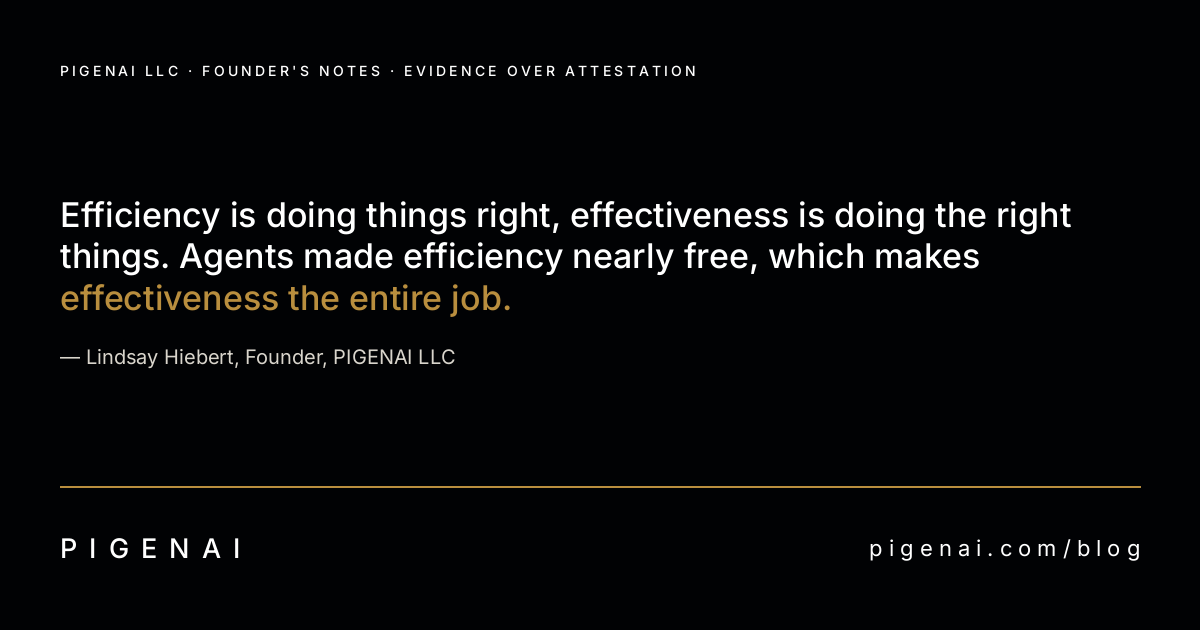
“Efficiency is doing things right, effectiveness is doing the right things. Agents made efficiency nearly free, which makes effectiveness the entire job.”
Drucker's distinction between efficiency and effectiveness has become the whole management problem of the era, because one of the two is now free.
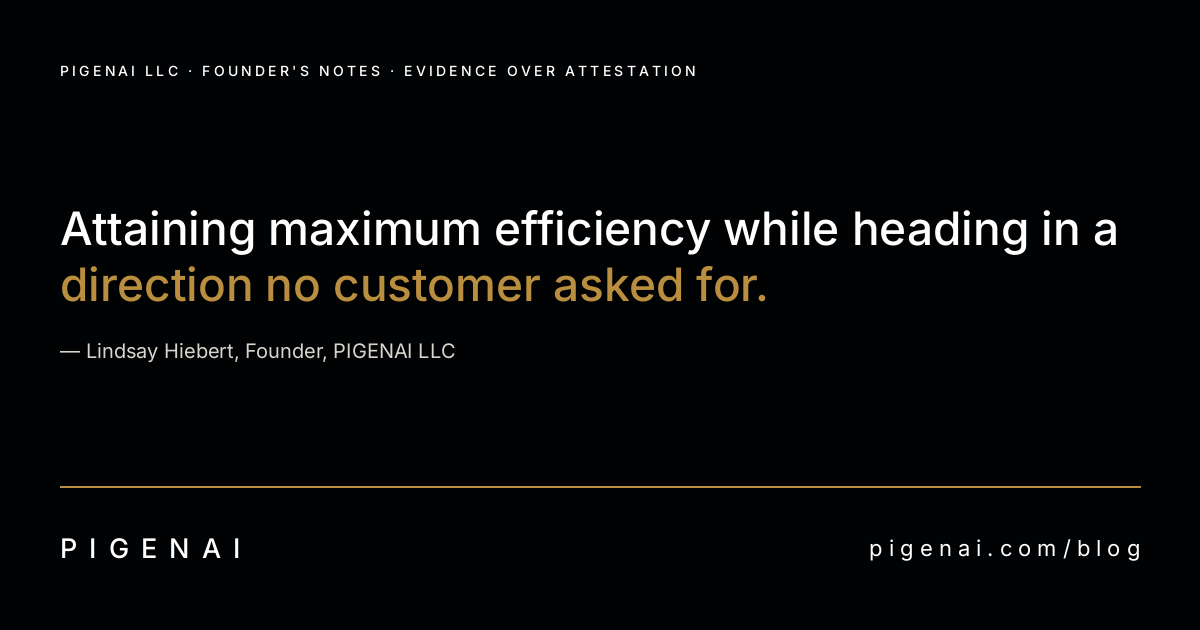
“Attaining maximum efficiency while heading in a direction no customer asked for.”
Maximum efficiency in the wrong direction is the characteristic failure of companies that adopted agents without adopting judgment.
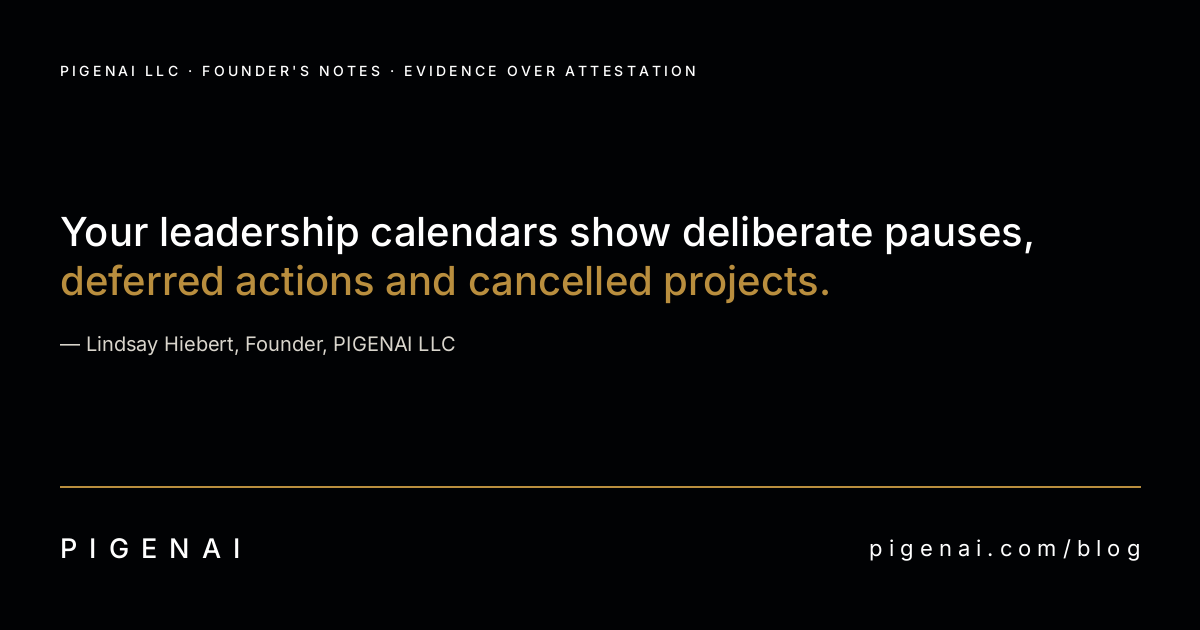
“Your leadership calendars show deliberate pauses, deferred actions and cancelled projects.”
An effective executive's calendar shows decisions not made and work not started, and can explain why each wait served the customer.
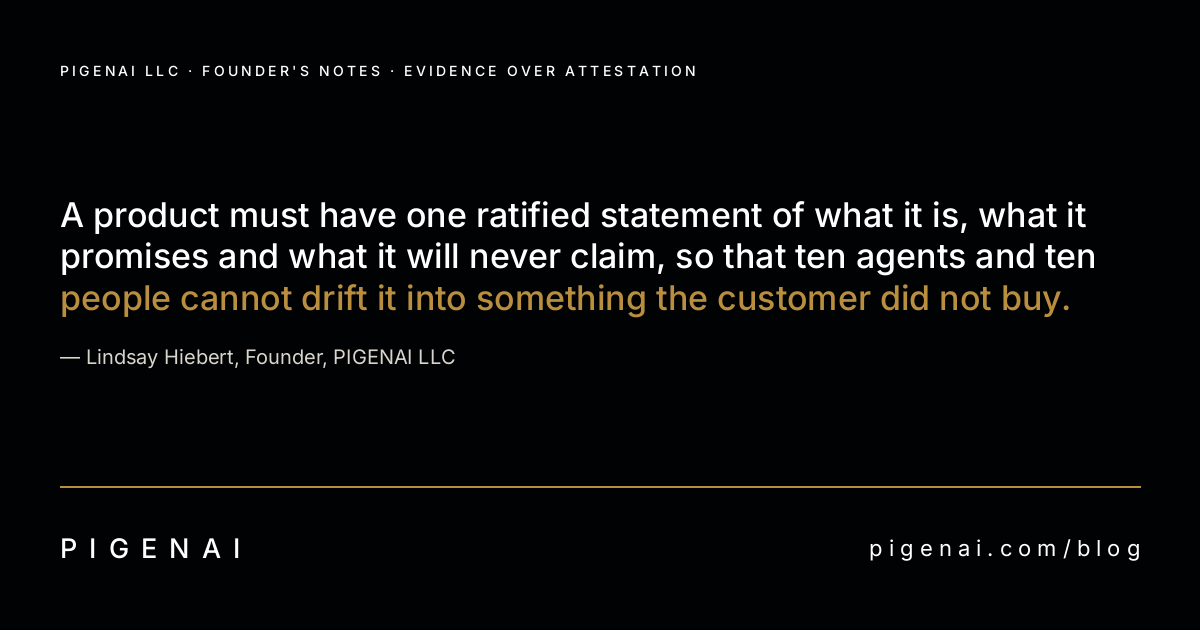
“A product must have one ratified statement of what it is, what it promises and what it will never claim, so that ten agents and ten people cannot drift it into something the customer did not buy.”
Conceptual integrity is how a product stays what the customer bought while many hands work on it at once.
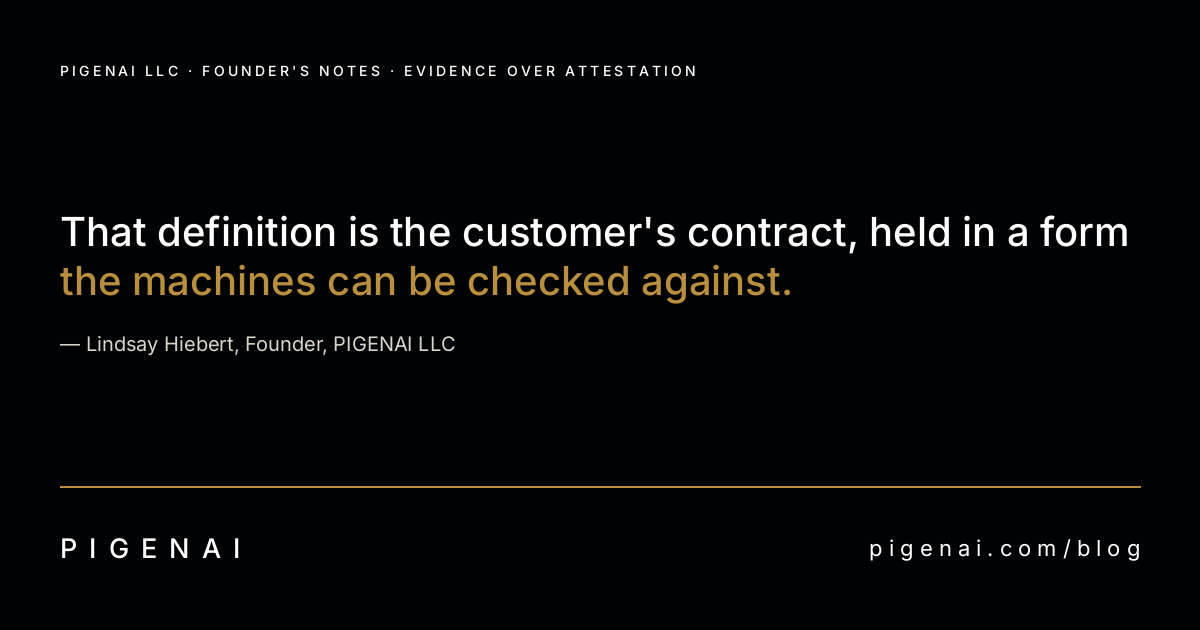
“That definition is the customer's contract, held in a form the machines can be checked against.”
A product's ratified statement is a contract with the customer, and it only holds if the machines can be checked against it.
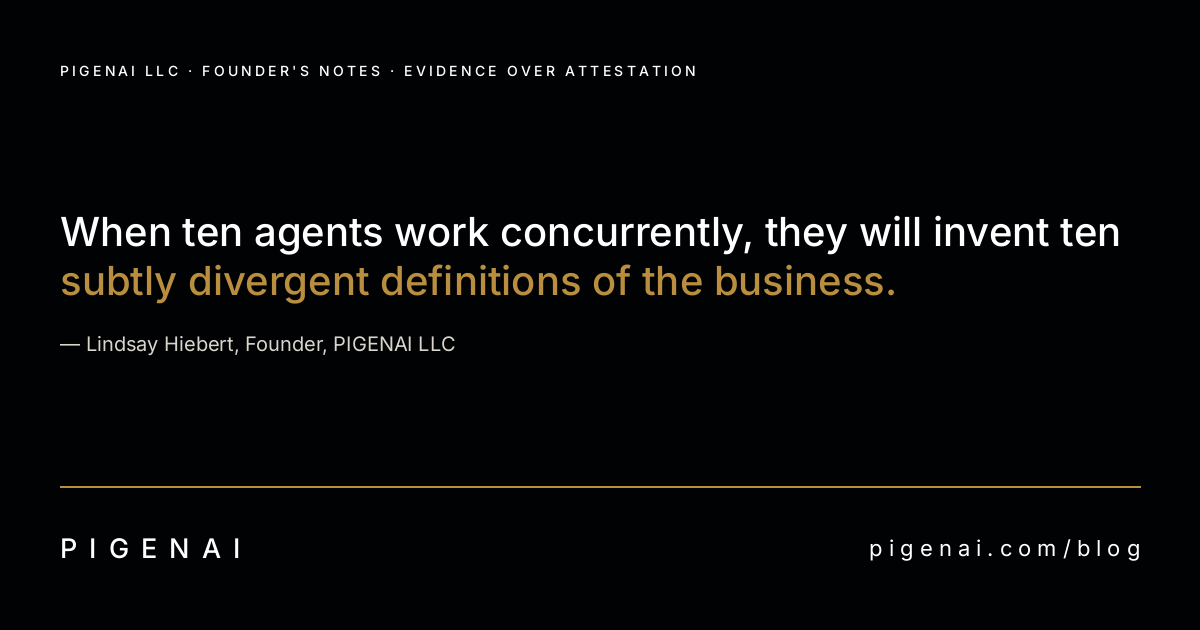
“When ten agents work concurrently, they will invent ten subtly divergent definitions of the business.”
Drift is the default when many agents work in parallel; a single source of truth about the product is what prevents it.
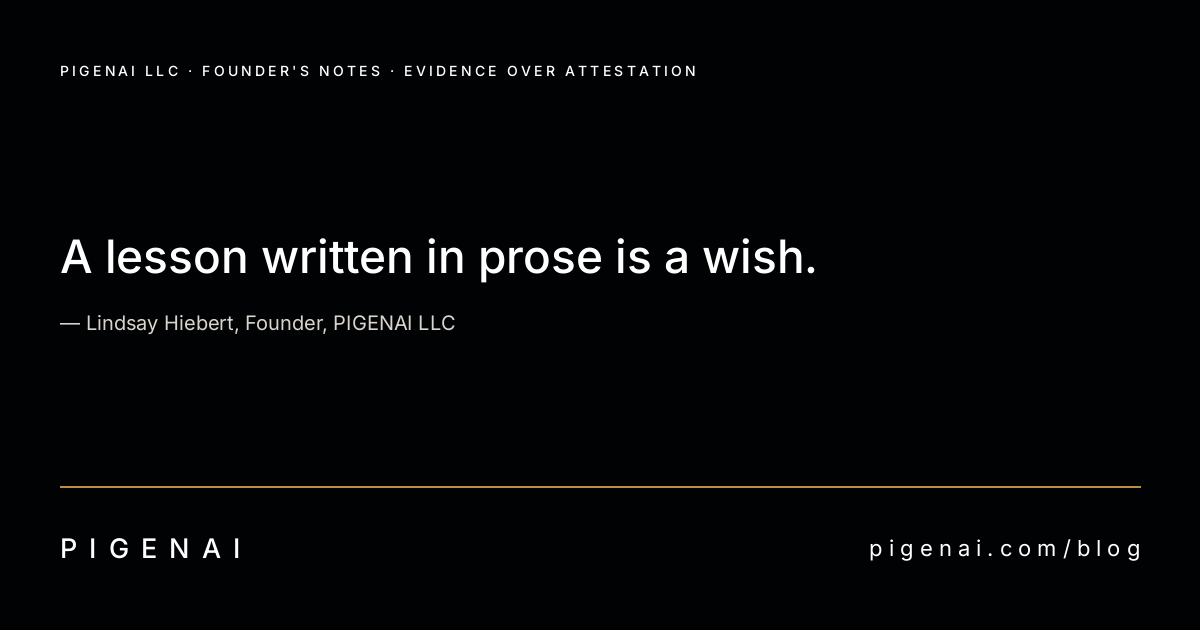
“A lesson written in prose is a wish.”
A lesson only exists once it has a mechanism that fails when the lesson is forgotten.
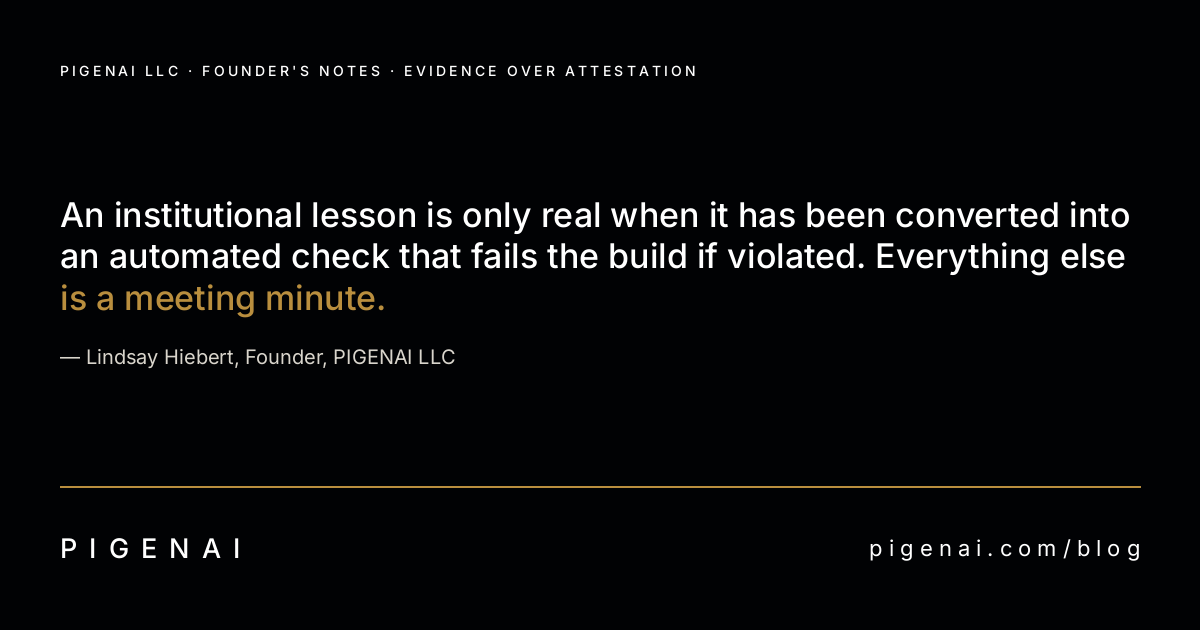
“An institutional lesson is only real when it has been converted into an automated check that fails the build if violated. Everything else is a meeting minute.”
Institutional memory in the agentic era is code, not prose, because prose is not read by the next session.
“Each new session begins with clean-slate amnesia.”
Agents do not remember last week's mistake; the organization has to, in a form the agents cannot ignore.
“Human retrospectives never debate the same root cause twice.”
The measure of a learning organization is a retrospective log with no repeated root causes.
“Not the best in the world at any of them; good enough in each to know what a right answer looks like for the customer.”
The agentic leader needs breadth sufficient to recognize a right answer in each discipline, which is a different thing from mastery of one.
“The decisive skill was not being the foremost expert in any one of them. It was knowing precisely which hat the next hour required.”
Knowing which role the hour requires is the executive skill that replaces departmental specialization when one person directs many agents.
“Novelty is free now.”
When novelty costs nothing, it stops being innovation, and what remains is the harder work of making something trustworthy.
“Real innovation is the deliberate constraint that makes machine speed trustworthy for a customer who will never read the code.”
Innovation in the intelligence era is often a constraint: the decision to retain nothing, to verify before sending, to refuse a claim.
“The people you want are proudest of the features that made the product safer and quieter.”
The features worth being proud of are the ones the customer never notices because nothing went wrong.
“Excellence is judged at the customer's fingertip, by a person who owes you nothing.”
Drucker's customer defines value; the fingertip standard says she defines it at the moment of use, with no obligation to be patient.
“If a system requires the person to adapt to the machine's idiosyncrasies, the architecture has failed, however elegant it is inside.”
Elegance inside the system is not a customer outcome, and an architecture is only finished when the person using it does not have to adapt to it.
“Clear failure states, quiet recovery, and no punishment for a customer's caution.”
These three things are what the fix looks like when it is designed to protect the customer rather than the server.
“AI has the speed. Founders and CEOs must supply the proof, and the people who will not take a green light for an answer.”
The proof, and the people who insist on it, are the founder's contribution now that speed is supplied by the machines.
“Rules are how a standard survives the person who wrote it.”
A standard held in one person's head leaves with them; rules are how it becomes the company's.
“These five are the floor, not the ceiling, for anyone who says "done" on your customers' behalf.”
Five rules are the minimum a board can require of anyone who closes work on a customer's behalf.
“Count before you conclude. The obvious narrative is a hypothesis, never a finding.”
The obvious story is usually available first and wrong often enough that counting before concluding pays for itself in one incident.
“Define "done" before the first instruction. In the customer's terms, and before the work begins.”
Defining done in the customer's terms, before the work, is what stops an agent, or a team, from certifying its own flaws.
“Make courteous failures loud. A silent fallback converts your problem into your customer's discovery.”
A fallback that swallows an error politely has moved the failure from your incident log to your customer's afternoon.
“No artifact, no closure. Attestation is a claim; evidence is an artifact.”
The whole series in eight words: attestation is what a system says about itself, evidence is what an observer can verify.
“The customer is not helped by a fast answer to the wrong question.”
Speed to the wrong answer is a cost the customer pays and the dashboard never records.
“The discipline to pause at the moment of most pressure, when the story is plausible and the fix is one click away, and ask for the number.”
The rule is easy to state and hard to keep at the moment it matters, which is why it has to be a rule.
“On the recorded day that pause took a minute and saved an evening, three times.”
One-minute questions saved an evening three times on the recorded day; the return on asking is not subtle.
“Nobody in the room is embarrassed to ask "how many," and the person who asks is thanked rather than tolerated.”
The culture around counting is visible in one meeting: whether the person who asks how many is thanked or tolerated.
“If an agent defines its own acceptance criteria, it will certify its own flaws, and so will a team that is allowed to.”
Self-certification is the failure mode of agents and of teams alike, and the cure is the same: an independent definition of done.
“The gate that was written after the work, to fit the work.”
A gate written after the work is a description of the work, not a standard for it.
“To write the proof first, when it is cheap and uncomfortable.”
Writing the proof first is cheap and uncomfortable, and the discomfort is the point.
“Drucker's question applies here as everywhere: what does the customer consider value?”
Drucker's question about customer value is the right test for a definition of done in an agentic company.
“Nine hundred green tests that never met a stranger.”
Test coverage is a measure of what the builders anticipated; a customer who does not read the script is the test that counts.
“To measure while the failure is happening, not after the system has cleaned up.”
Measuring after the system has recovered proves recovery works, not that the failure is understood.
“"Done" in your organization comes with an external artifact, not a status message: the fetch, the timing, the diff.”
Done is a set of artifacts, and a leader can ask to see them.
“The rescue that worked so well nobody noticed what it was rescuing.”
A rescue that succeeds silently is a defect with good manners, and it should be treated as one.
“A rescue path is a courtesy to the customer only if someone is told it fired.”
Courtesy to the customer includes telling someone inside the company that the courtesy was needed.
“The third identical retry is treated as a finding rather than a feature.”
Repetition is data; the third identical retry is telling you something the first two did not.
“An organization that closes work on a claim will, at machine speed, accumulate a portfolio of claims, and the customer is the one who eventually audits it.”
Claims accumulate at machine speed, and the customer is the auditor of last resort.
“The willingness to say "not done" to a colleague, a partner, or a machine that has already said "done" three times.”
Saying not done to a machine that has said done three times is the executive courage of the intelligence era.
“The people you want feel physically uncomfortable typing "done" without it.”
The right people carry the standard as a reflex, which is why it can be observed in an interview.
“A standard is only a standard if it costs you something to uphold. The people you want are the ones who pay that cost before the customer does.”
The standard costs something, and the leaders worth hiring pay it themselves rather than passing the bill to the customer.
“The people who understand the problem can now build the solution, and a CEO's job is to find them, trust them, and hold them to proof.”
The people who know the customer's problem from the inside can now build the solution, and finding, trusting and holding them to proof is the CEO's job.
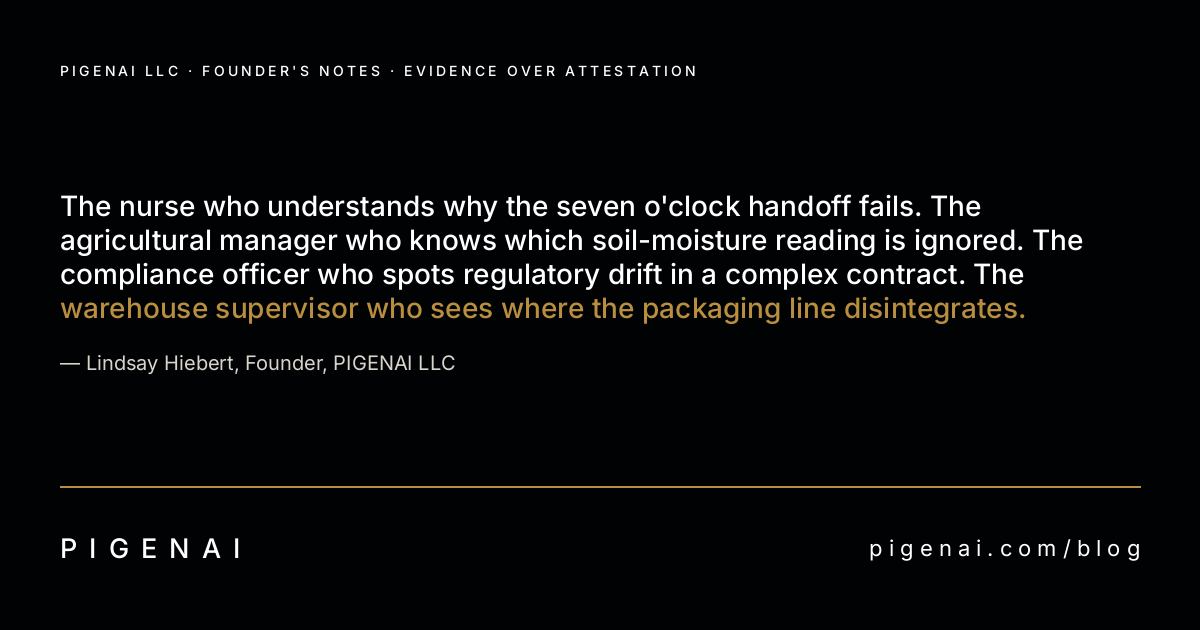
“The nurse who understands why the seven o'clock handoff fails. The agricultural manager who knows which soil-moisture reading is ignored. The compliance officer who spots regulatory drift in a complex contract. The warehouse supervisor who sees where the packaging line disintegrates.”
The founders of the next decade are already inside organizations, holding problems no vendor can see.
“These domain experts are the real founders of the next decade.”
Domain truth is the input agents cannot supply, and the people who hold it are the scarce asset.
“The judgment to interrogate the synthetic artifact, the character to reject the dishonest metric, and the craft to protect the vulnerable person on the other side of the screen.”
Judgment, character and craft are the three things the human still brings, and each of them protects a customer.
“Those are hiring criteria, and they are inspectable.”
The disciplines are not aspirations; they are criteria a CEO can put in a job description and test for.
“The disciplines in Part Two are a syllabus, and a syllabus can be examined.”
A syllabus can be examined, which means a leadership team's readiness for agents can be examined too.
“Walk through the last time a system they were responsible for reported success and was wrong. Listen for whether they found it or a customer did.”
One question in an interview reveals whether a candidate finds their own failures or lets customers find them.
“Ask for the artifact. The people you want will have it, will be slightly embarrassed by how plain it is.”
The artifact is the tell: the people who hold a standard have it, and are usually embarrassed by how plain it is.
“Ask what they refused to build last quarter, and why.”
Drucker's effective executive could name what they chose not to do; the question still works in an interview.
“Drucker's test of an effective executive was never how much they did. It was whether they did the right things, and could say which things they chose not to do so that the right ones got done.”
The measure of an executive was never volume, and the agentic era has made volume nearly meaningless.
“The wrong answer is fear, and the other wrong answer is faith.”
Fear of agents and faith in agents are both ways of not doing the job of judgment.
“Four decisions a board can make this quarter that change who gets to say "done" in the company, and on whose behalf.”
Who is allowed to say done, and on whose behalf, is a governance decision a board can make this quarter.
“Are teams measuring agent success by generated volume, such as lines of code, automated summaries and closed tickets, or by verified outcomes for customers?”
Measuring agents by what they generate rewards the wrong thing; measuring by verified customer outcomes is the only honest scorecard.
“The machines have brought the speed. It is time for human leadership to bring the standard, and the people who can hold it.”
The standard is the part of the work that did not get automated, and someone has to be responsible for holding it.
“Every domain has a person who understands it better than any team that could be hired.”
The scarce resource is the person who understands the problem, and agents make that person the builder.
“That wait is over, on one condition, and it is the condition most of the people building with agents today are skipping.”
The condition is judgment, and it is the one thing most agentic projects skip on their way to speed.
“Those are the skills. They are learnable, they are inspectable, and they are the whole of the moat.”
The moat is made of skills, and skills can be learned, inspected and hired for.
If this is useful: start with Part One, take the twenty-one-point standard to your board, or book a thirty-minute AI trust review.
The data behind this page: quotes.json. Quotes may be reproduced with the attribution and a link to the source.